UK Registered Charity 1122246
Company limited by guarantee number 05411110
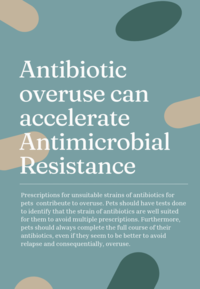
Here is some dedicated information on how to prevent AMR both in practice and in the home, download our free infection control guidelines and take our free online hygiene audit test.
We ask that when using this information, you remember that the Bella Moss Foundation is run entirely by volunteers and that you consider donating to the charity to help us continue to provide free education.
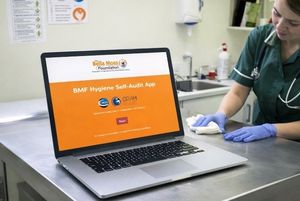
Practice hygiene is fundamental to everything done in the building and must include everyone working there. The self-audit online test is a simple way of demonstrating how effectively hygiene is being managed and enabling specific areas to be highlighted and addressed.
BMF Practice protocols - RCVS recommended
Bella Moss Foundation infection control guidelines and practice protocols provide a clear and practical guide to the prevention and management of infectious agents in practice and their relevance to AMR. They have been created by the charity’s top veterinary advisors in response to the wide-ranging approaches to infection control seen in everyday practice.
Authors include Vets Dr Pam Mosedale also RCVS Practice Standards Scheme(PSS) lead Inspector, Dr Tim Nuttall of University Edinburgh Dermatology Dept., Dr Neil Forbes and RVNs (the late) Louise O’Dwyer and Emma Gerrard. All guidelines have been extensively updated in 2025 by Dr Neil Forbes FRCVS.
The Bella Moss Foundation thanks Ceva animal health for their contribution to these guidelines and self-audit test
RCVS practice standards
A comprehensive set of standards for best veterinary practice hygiene are available from the RCVS.
The RCVS Practice Standards Scheme has modules on practice hygiene to reward best practice here.
Please read this important paper, if you want a full copy of the paper you can contact Dr Neil Forbes FRCVS (former BMF Trustee), directly on neil.forbes2011@yahoo.co.uk. Neil explains the following about this paper:
This paper confirms that at least in the 13 practices studied, they were not as clean as recommended or expected. However, once reservoirs of contamination, or indications of poor working practices, are detected they can generally be resolved fairly easily. Longitudinal studies in human hospitals demonstrate that ATP reduction correlates with decreased nosocomial infection rates (Bello, 2019, Chan et al 2015, Kim et al 2023), ranging from 45–75% over study periods of 18 months to 5 years. Full references are in publication.
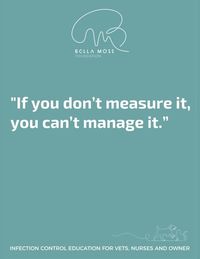
To conclude, as veterinary professionals, we owe it to our patients and their owners as well as our staff, to maintain clean and hygienic facilities, in order to minimise the risk of hospital acquired infections or worse still zoonotic infections in staff or owners. We can all to better. 'If you are not measuring it, you cannot manage it'.
Microbiology, Adenosine Tri Phosphate (ATP) or Fluorescent Markers are recommended by RCVS to measure sanitisation outcomes. BMF suggests the use of ATP, as the research above demonstrates it to be effective, practical and affordable. Whilst other suppliers exist, as all current published research has used Hygiena® EnSURE® Touch and UltraSnap® Surface ATP swabs, it is suggested that clinicians use the same. The official Hygiena supplier to the Veterinary Profession, supported by Veterinary specific technical support is Veterinary Practice Hygiene .
Read the full study here
Read Vet Times article about the study here
Read Vet Times article about infection control guidance for vets here
Our clinical advisors and trustees
Responsible antibacterial use in the veterinary community
Vet Time infection control guideline launch
Veterinary nursing news infection control guidance for vet practices
What can pet owners do minimise the risk of Noscomial infection
Responsible use of antibiotics
How can you tell if your pet's practice is taking infection control seriously?
| Corporate Sponsor |
|---|
|
|
| Website Sponsor |
|
|